Two Years Later: Where Susan's Work Is Taking Us Next
Two years after Susan Wojcicki's death, the Foundation she inspired is accelerating research into early detection, prevention, and a future lung cancer vaccine.
August 14, 2026

.png)
This month marks two years since we lost Susan. I had the privilege of working alongside her in the final stretch of her life, helping her turn her lung cancer diagnosis into an ambitious research portfolio aimed at changing the trajectory of the disease. Two years later, Susan’s absence is still deeply felt. But as we build the foundation, I also feel her presence everywhere—in how we approach problems, the decisions our team makes, and the questions we're still chasing because she asked them first.
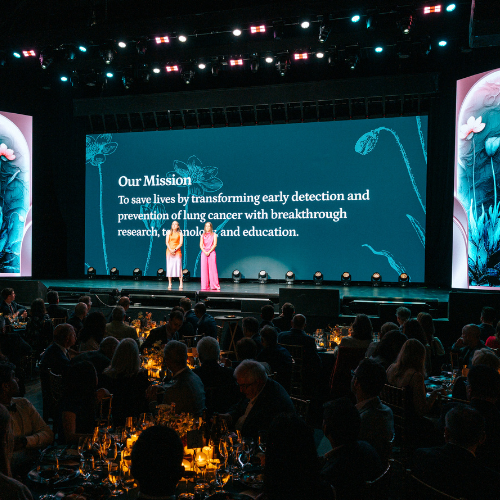
It's been just two months since we launched the Susan Wojcicki Foundation to carry that work forward, and momentum is building fast. TIME and Good Morning America introduced Susan's mission to a national audience. Scientists, technologists, and friends came together for an evening that raised $15 million for the fight ahead.
But what feels most meaningful to me isn’t simply the momentum. It’s how we are building—and how much of what we learned from Susan continues to shape our approach.
Susan believed in asking questions others weren’t asking, bringing together people with different expertise and perspectives to solve them, and building shared resources that could accelerate progress across the field. She also believed in moving quickly when science and technology opened new possibilities. We’re trying to bring that same spirit to everything we do.
You can see it in the questions we’re taking on: How can we identify risk earlier? How can we reach people missed by today’s screening guidelines? Through Team ATLAS, we’re asking what can we learn from “cancer super-avoiders”—people whose natural protections may point toward entirely new ways to prevent cancer?
And you can see it in how we’re pursuing the answers—bringing together people with different expertise, perspectives, and experience across disciplines and industries. This summer, we convened experts from around the world to rethink how we identify and screen people who fall outside today’s guidelines, including how advances in imaging, biomarkers, and AI could help us find risk sooner. It is also driving our early detection biorepository—a shared data and sample resource designed specifically to accelerate the development of tests for people whom current screening guidelines miss.
Most of this work is just beginning. Two years ago, our goal became to change how lung cancer is understood, detected, and prevented. Today, that future feels closer than it did when Susan received her diagnosis, and we are more determined than ever to make it a reality.
As we move forward I still feel Susan’s presence in the questions we ask, the people we bring together, and the choices we make about where we can have the greatest impact. We have a long way to go, but I hope we’re approaching the work in a way Susan would recognize.
Thank you for being part of our story. Join us as we keep building.
With hope and gratitude,
Nadia Litterman, PhD
Executive Director, Susan Wojcicki Foundation
Related Posts
One Month In. Extraordinary Momentum.
In the month since launching, the Susan Wojcicki Foundation has accelerated research, mobilized supporters, and built a movement around the urgent goals of finding lung cancer earlier, when it is most treatable, and preventing it altogether.
.png)
Researchers identify a rare inherited gene mutation that substantially raises a person's risk of developing lung cancer
Knowledge about this rare inherited gene change can empower those who may be at risk to speak to their doctor.
.png)
The Susan Wojcicki Foundation Talks with Norah O’Donnell about Lung Cancer, Risk, and Why Screening Rates Remain So Low
Anne Wojcicki, Dr. Kim Sandler, and lung cancer survivor Shira Kupperman Boehler join O'Donnell's new women's health podcast, “Healthful,” to discuss Susan's story, the science of early detection, and what needs to change.