Silicon Valley Girl sits down with Susan Wojcicki’s family as the Foundation launches on YouTube
In one of the first conversations on the Foundation’s new channel, creator Marina Mogilko talks with Susan’s husband, sisters, and mother about who Susan was and why lung cancer education matters.
November 9, 2026
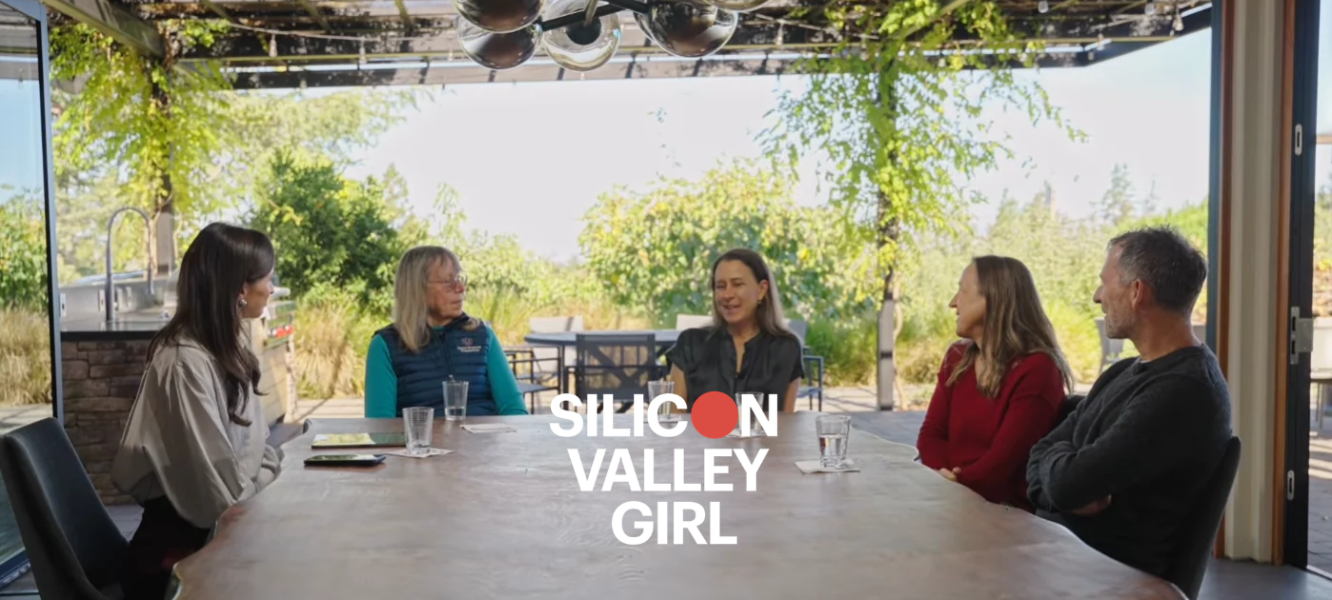
Last week, the Susan Wojcicki Foundation launched its YouTube channel and its Change the Conversation campaign for Lung Cancer Awareness Month. Among the first videos on the channel is a conversation between Marina Mogilko, host of Silicon Valley Girl, and Susan’s family: her husband, Dennis Troper; her sisters, Anne and Janet Wojcicki; and her mother, Esther Wojcicki.
Education and awareness are core to the Foundation’s mission, and that means meeting people where they are. Susan saw the potential in YouTube from the beginning and was a champion for creators, and the Foundation is now reaching new audiences through the creator communities she helped foster. Marina is one of those creators. She appears in the channel’s launch trailer and sits on the Foundation’s Creator Advisory Council, and she brought a creator’s perspective to a conversation that is both personal and practical.
Marina said she “always dreamed” of interviewing Susan. As a working mom herself, she had so many questions she hoped to ask. She spoke with the family at their farm, and opened by asking for a story that illustrates who Susan was. Dennis started with her role as a mother. “If there’s one thing I can tell you, it’s how much she spent her entire adult life focusing on her kids,” he said. Anne described a sister who never took herself too seriously, even at events like the Oscars, where she was “always very real and very grounded.”
Marina’s questions then turned to Susan’s diagnosis, and to what her family hopes others will take from it. Janet said that apart from pain in her hip, Susan “had no symptoms. No cough, no fevers, no malaise, nothing.” Susan was proactive about her health, Anne said, with regular checkups and screenings, but lung cancer was never something anyone had put on her radar.
That is why education is at the center of the Foundation’s work. Lung cancer is the leading cause of cancer death worldwide, and in its early stages it often causes no noticeable symptoms. Dennis said that when it is found early, it is “highly treatable.” Janet pointed to a barrier that gets in the way of screening: stigma. “Anyone who has lungs can get lung cancer,” she said. “No matter who you are, you shouldn’t have this stigma and fear of actually getting some type of screening.”
Marina asked what the family hopes the new channel will do. “The most important thing is the awareness,” Anne said, including the message that anyone with lungs can get lung cancer. She said the channel will also tell stories of optimism and invite everyone to take part in research. Marina’s own take on the project echoed Susan’s approach. With a channel and a Foundation both aimed at including everyone, she said, “it is her spirit.”
Susan’s family carries that spirit into the work. Esther recalled Susan asking what she could do to make sure other people don’t face the same thing. Dennis said that a few weeks before she died, Susan told him to do something meaningful. “It’s time to help the community, and that’s what I’m working on,” he said.
This interview is one of the first in-depth collaborations we’re launching as part of Change the Conversation, a campaign to change how people understand lung cancer, including their own risk and how it can be caught earlier, and how people talk about it. The Foundation is working to remove stigma and outdated assumptions that get in the way of screening, treatment, and research funding. Its new YouTube channel will feature clear, approachable content about lung cancer including personal stories, risk factors, screening, early detection and prevention, stigma, news and advancements, and more. Formats will include deep-dive interviews, creator collaborations, Shorts series, plus an education hub with resources and social toolkits.
There are several ways to take part. Subscribe to the Foundation’s YouTube channel and watch the conversation with Marina and the family. Visit the campaign page to learn more. And use our conversation starters to talk about lung cancer, risk, and screening with the people you love.
Related Posts

Researchers identify a rare inherited gene mutation that substantially raises a person's risk of developing lung cancer
Knowledge about this rare inherited gene change can empower those who may be at risk to speak to their doctor.
Lung Cancer in ‘Never-Smokers’ Draws New Focus—and Questions - STAT News
Researchers are grappling with demographic shifts in the disease and what can be done.
One Month In. Extraordinary Momentum.
In the month since launching, the Susan Wojcicki Foundation has accelerated research, mobilized supporters, and built a movement around the urgent goals of finding lung cancer earlier, when it is most treatable, and preventing it altogether.